( Case Study )
KapeCMS:A/BTestingModule
Consumer software · Self-serve experimentation for CRO
Introduction
Anintegratedsplit-testingtool
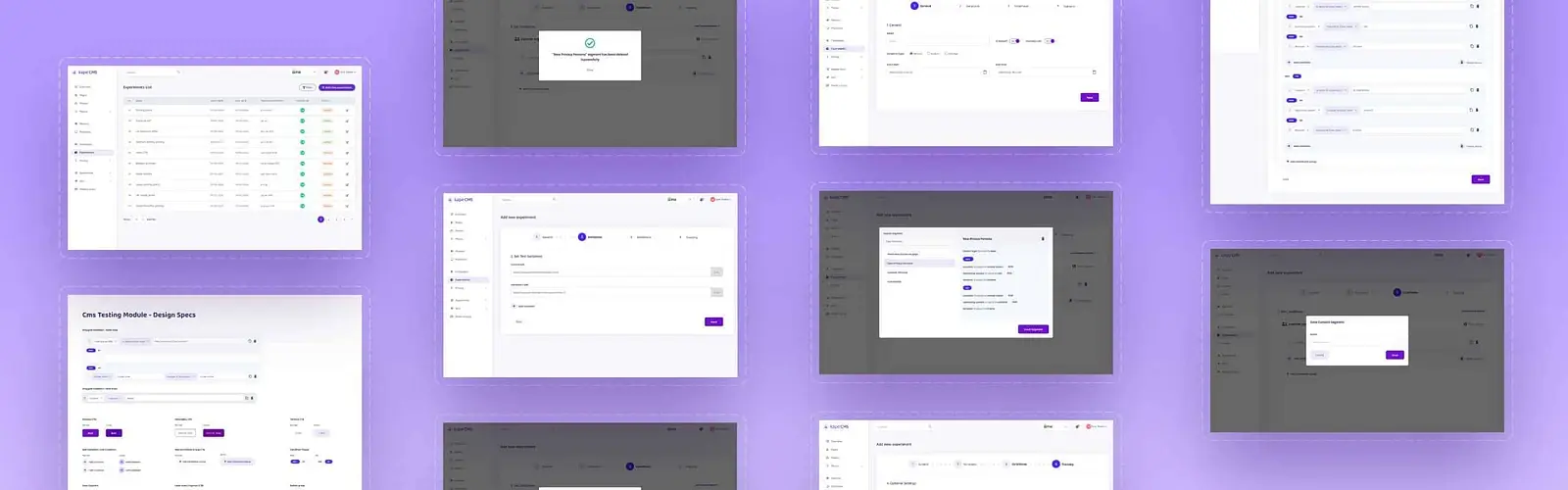
The A/B testing module was designed and developed as an integral tool for the Kape CMS to serve the CRO team's needs. The module allows running multiple A/B tests between different page variations (split testing).
The challenge. The Conversion Rate Optimization (CRO) team requested a tool to help optimize marketing and sales performance, one that could integrate with the company CMS and test different website elements, purchase funnels, and landing pages.
My role. As the lead product designer, I analyzed which testing tools best suited the CROs' most common use cases, defined the “must-have” features, and created an easy-to-use integrated solution for the CMS.
Discovery
Aquick,high-intensityresearcheffort
Considering this was an internal module with limited resources, the discovery phase was a quick, high-intensity effort to define project goals, analyze existing solutions, and understand the unique needs of the CRO team. It included two parts: an open discussion with the marketing and CRO team leads, and an analysis of popular testing tools on the market.
- 01The most common use case is running an A/B test between different page variations, known as “split testing”.
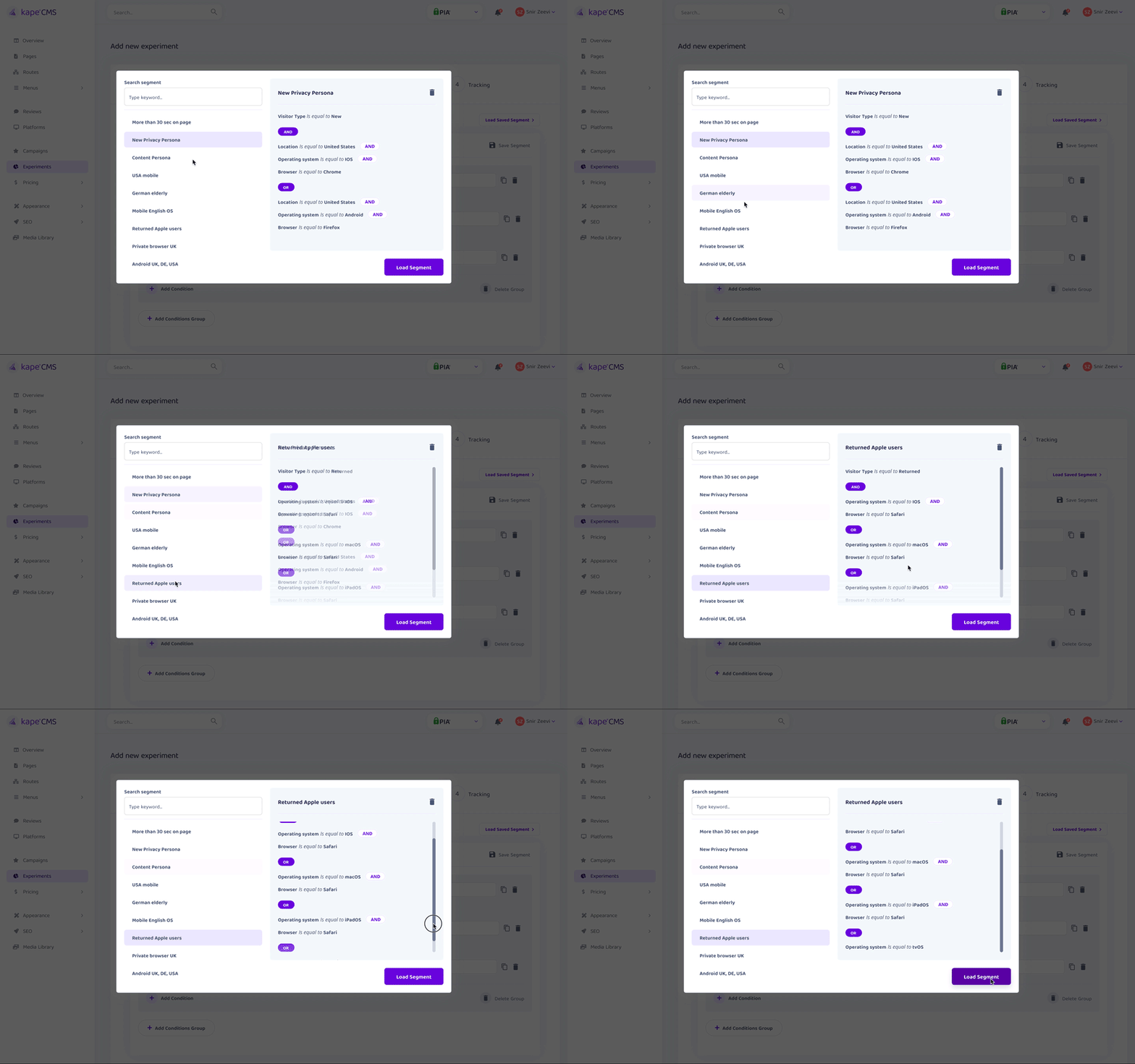
- 02Configuring the testing-group characteristics is the most challenging part of current tools.
- 03The CRO team runs most experiments for the same segments of users.
I analyzed two optimization platforms, VWO and Google Optimize, focusing on testing-group configuration and variation setting. Both offer advanced tooling, but keeping our CRO's unique needs in mind, I focused on the split-test flow and the targeting tool's functionality.
Define
Thefeaturesthatmatteredmost
Based on the discovery insights, we decided to build a new experiments module for the company's CMS, bringing in the most valuable features from external optimization platforms:
- 01Split-URL A/B testing tool
- 02Audience conditioning tool
- 03Library of saved segments
- 04Experiment duration and tracking settings
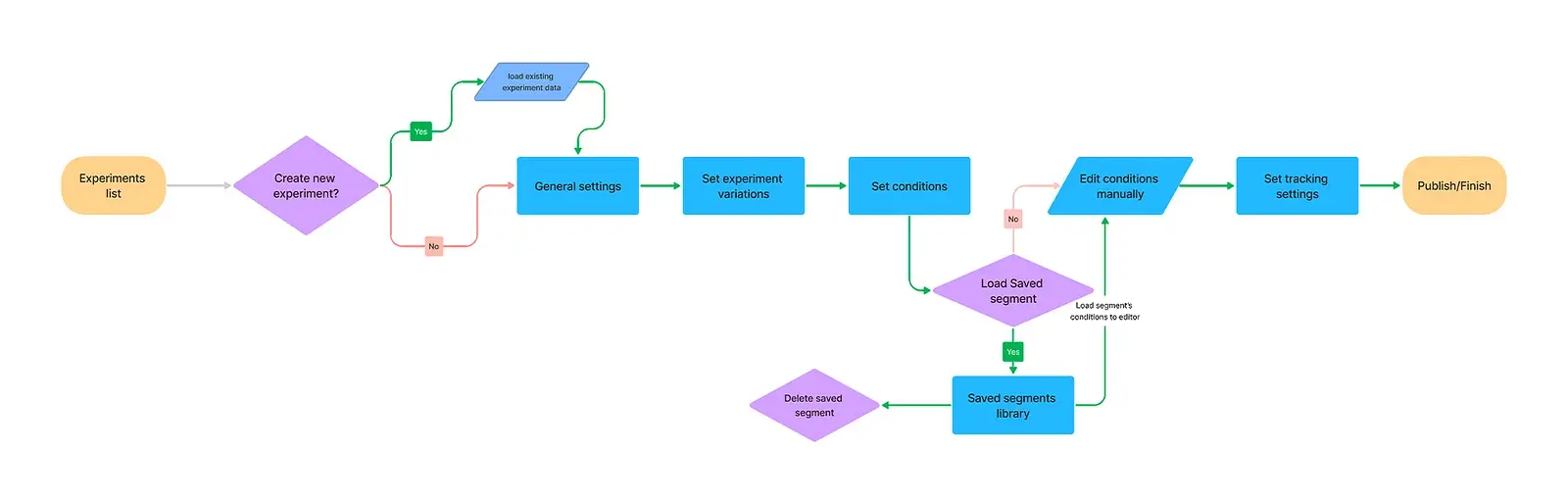
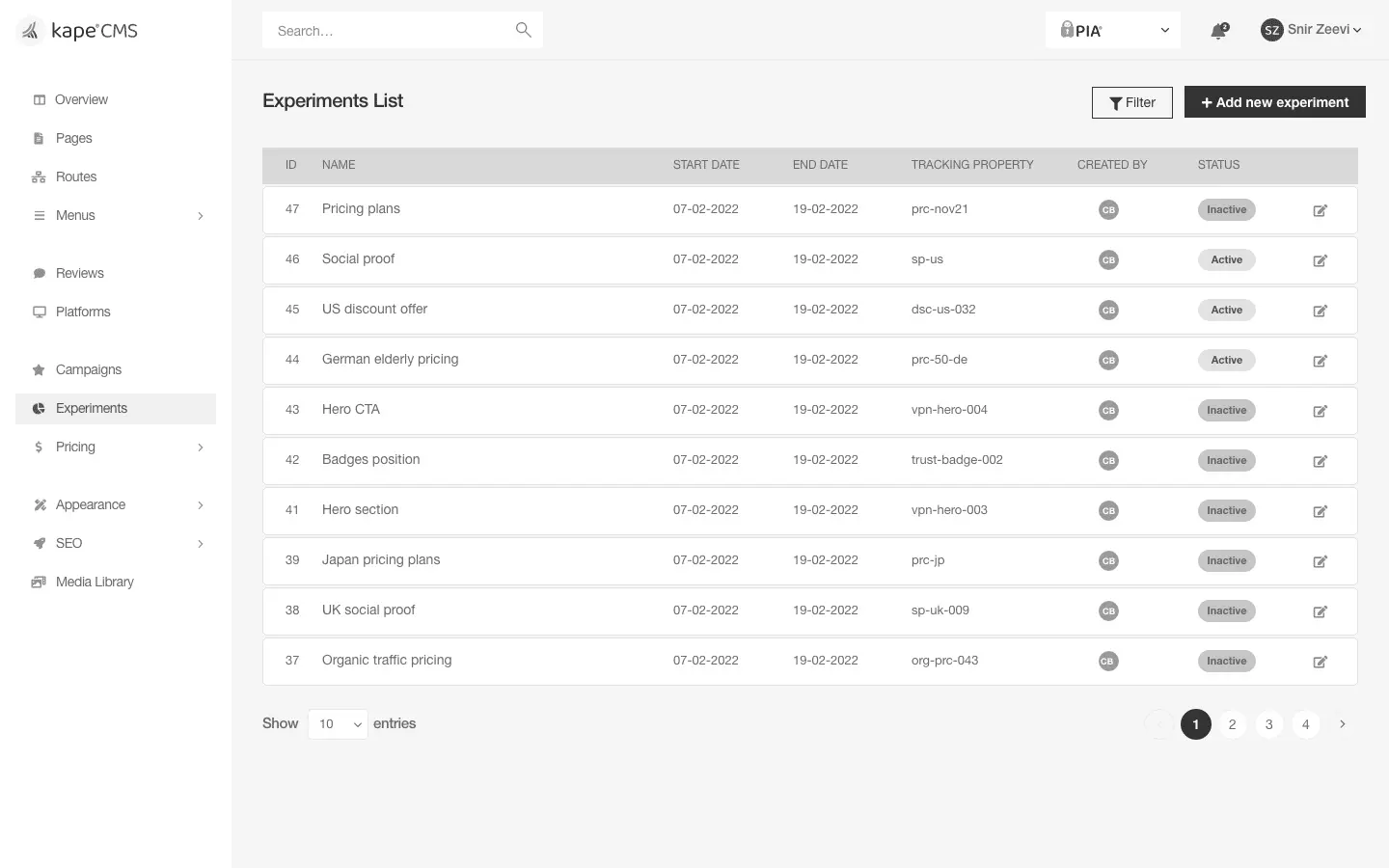
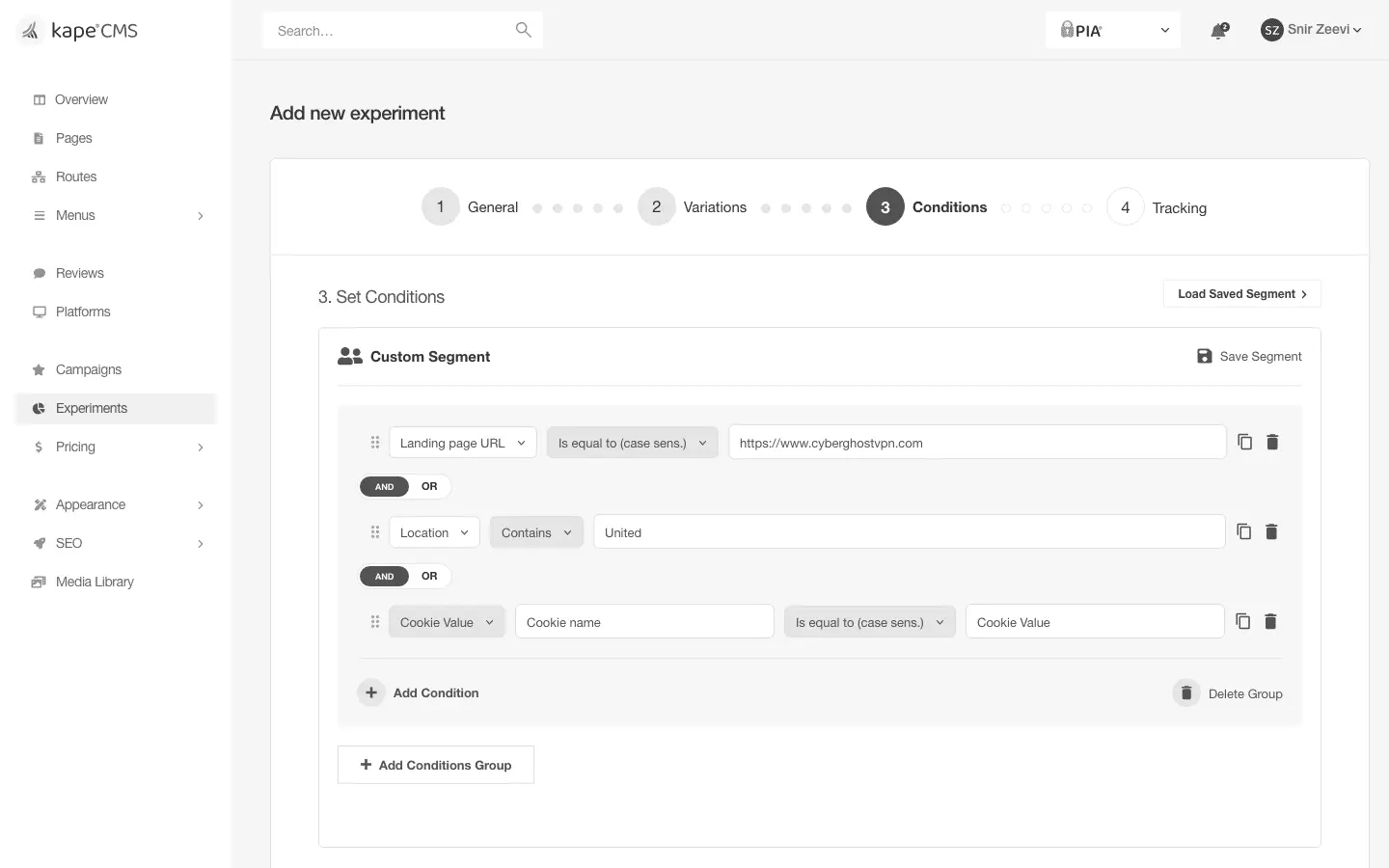
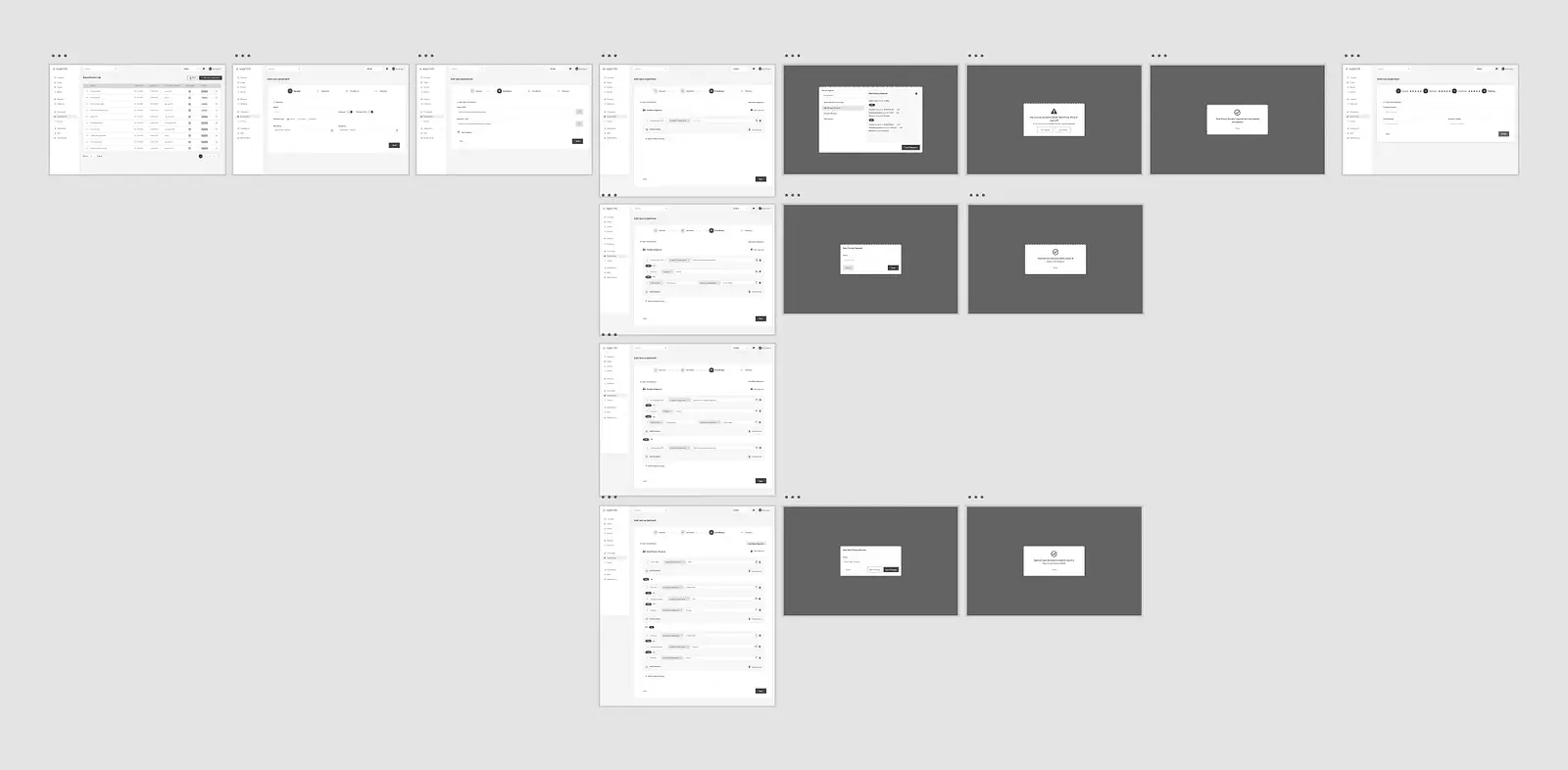
Since the module integrates into the existing CMS, I adopted the campaign creation and management flow. And because the CRO team had worked with external tools, the new module's flow and interactions intentionally reuse familiar UI patterns.
Detailed Design
Simple,straightforward,easytouse
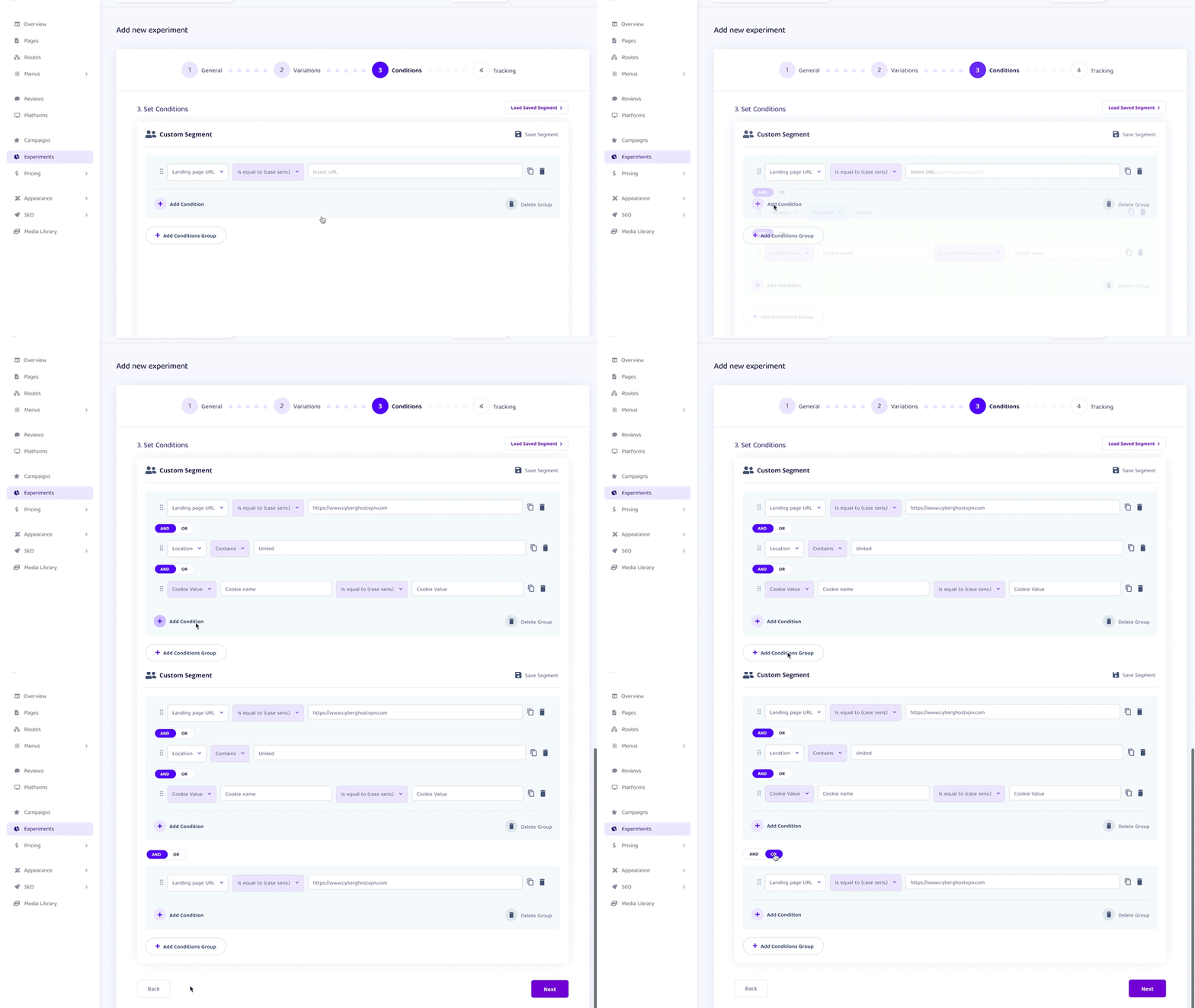
The main focus was a simple, easy-to-use experiments interface. To achieve it I created visual differences between condition groups, used multiple tints of the CMS palette to indicate different action types, and built quick visual overviews of segments.
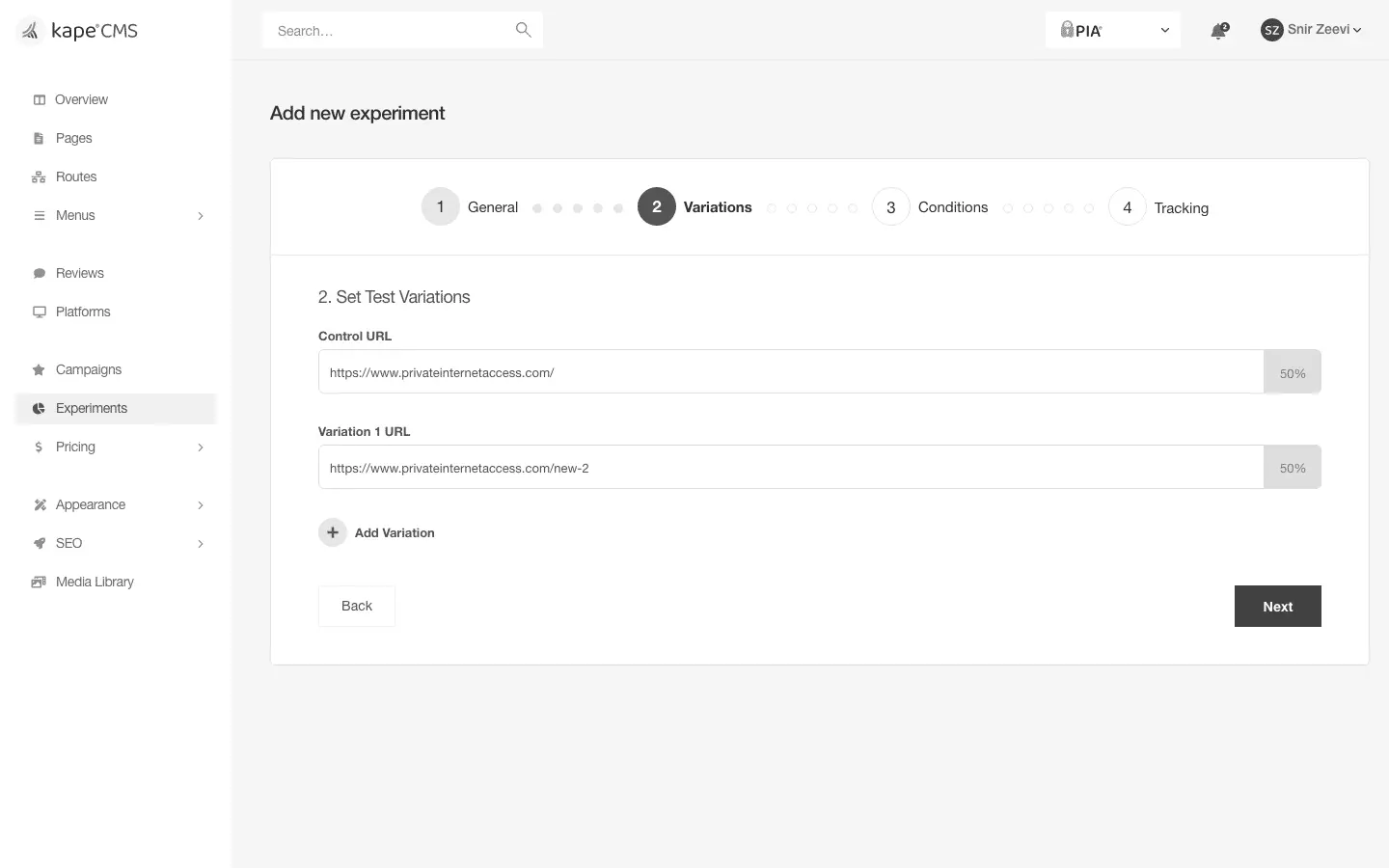
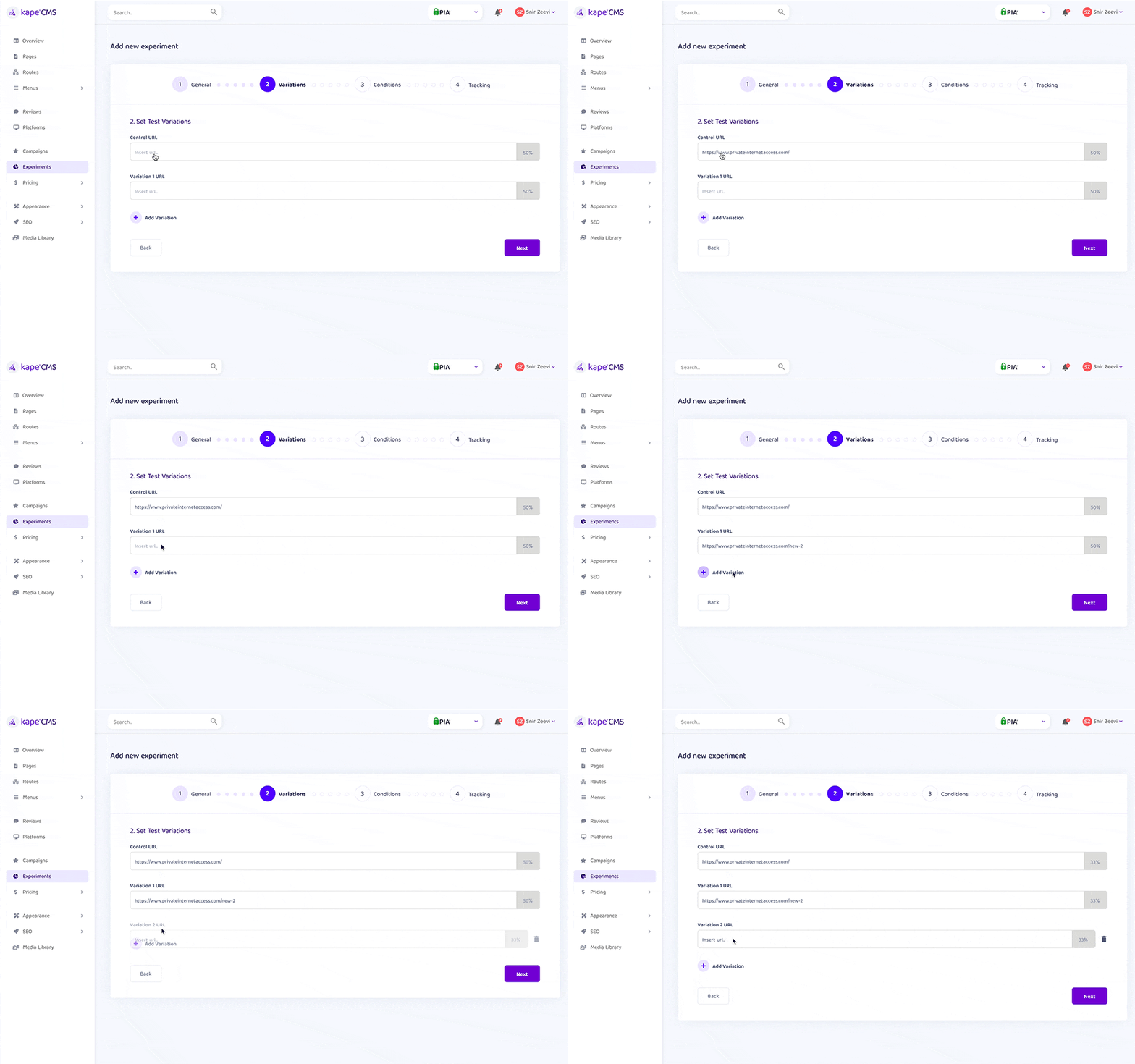
Variations setting. The CRO team sets a “Control” URL and multiple variations. The audience is divided evenly to obtain unbiased results. A maximum of one control and three variations keeps experiment data statistically significant.
Design System
Newcomponents,refinedpatterns
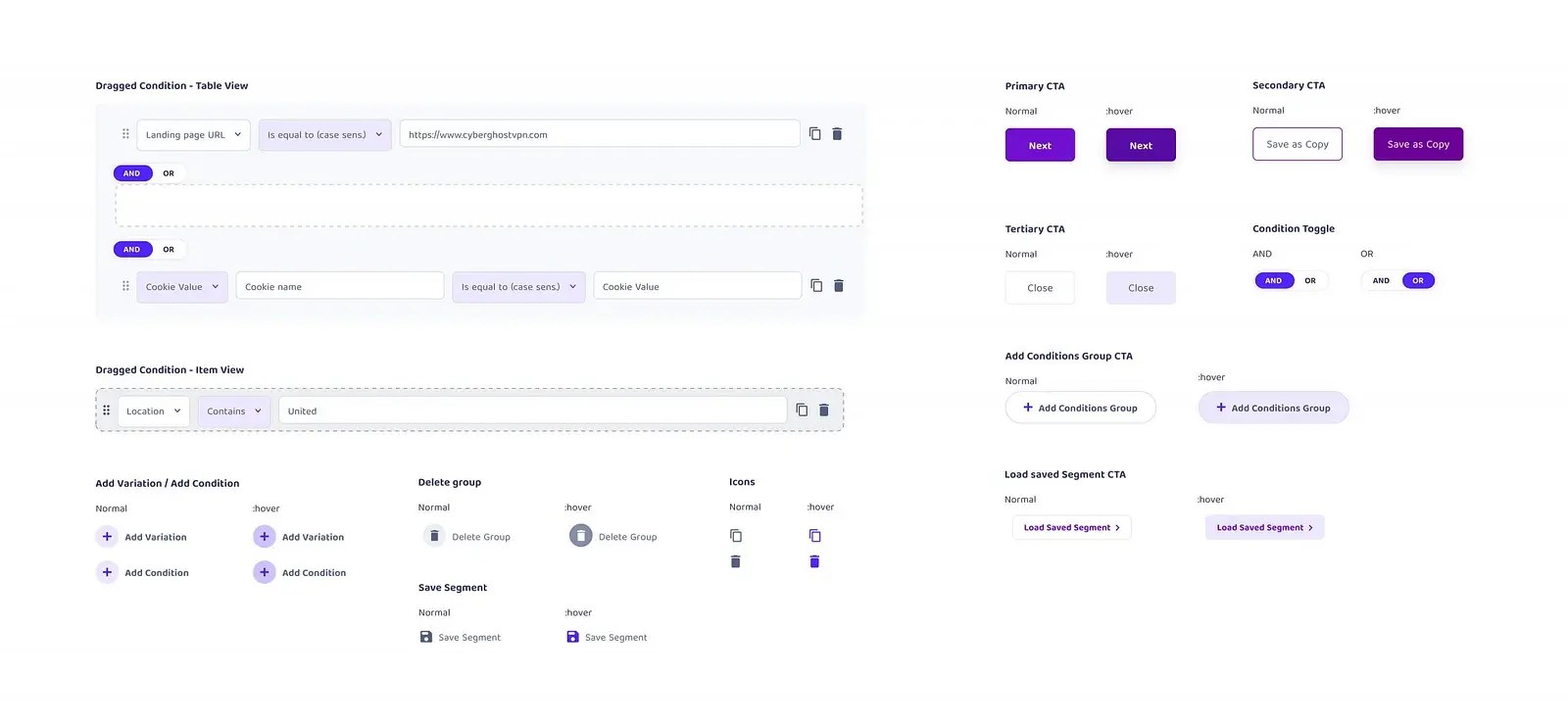
As part of the build, new components were created alongside adjustments to existing ones: new button variations, icons, and a draggable table item for configuring conditions. Highlighting the AND/OR operators with color and introducing a distinct select-box state made the segment conditioning tool far easier to read.
Next Project